
How long to rest coffee beans after roasting
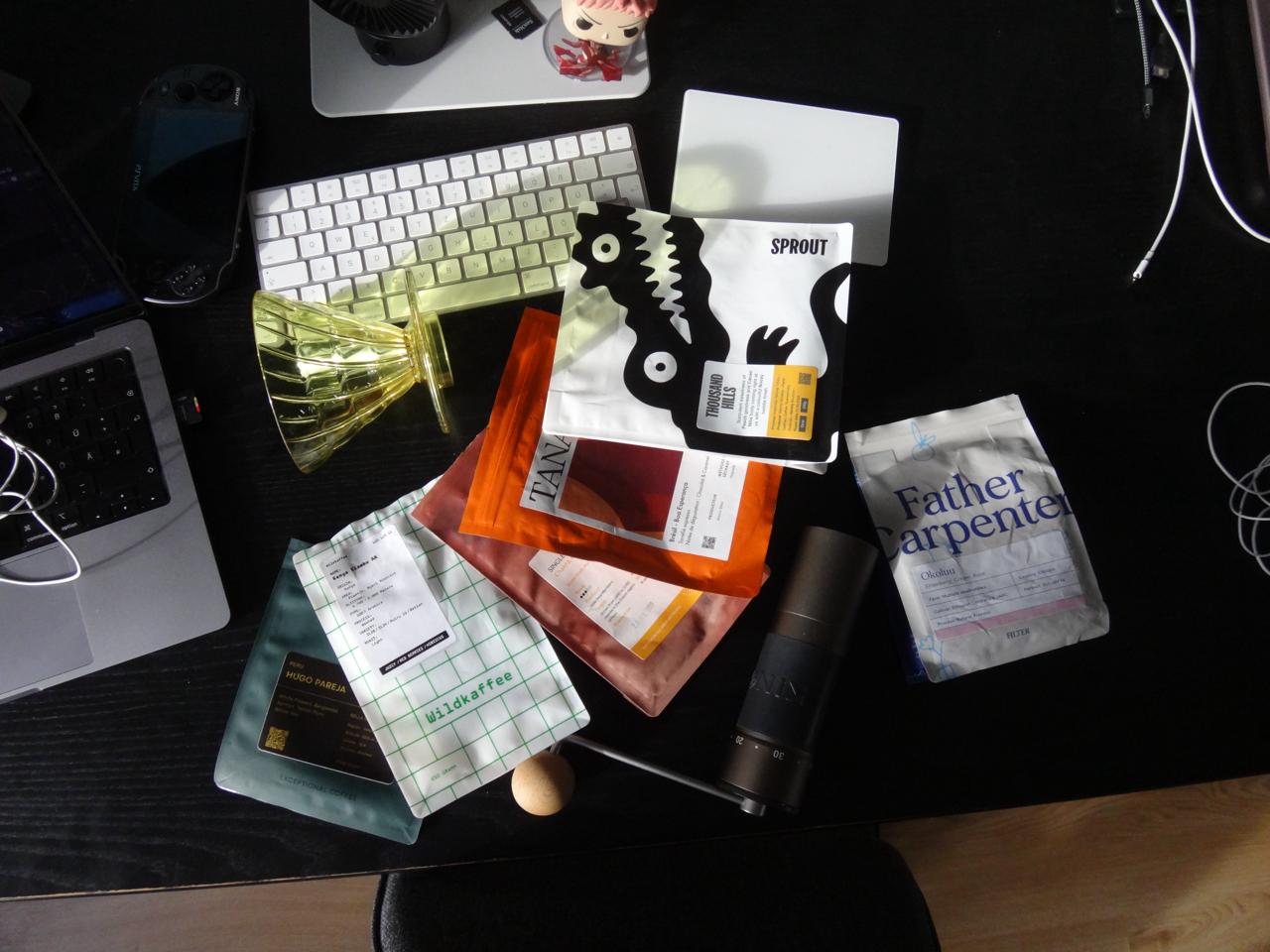
How long to rest coffee beans depends on how you brew and how dark the roast is, but for most coffee the answer is a few days to three weeks after the roast date. Filter coffee is usually ready within the first week or two, espresso usually needs one to three weeks, and light roasts take the longest.
Here’s why beans need to rest at all, why roasters’ advice varies so much, and how to tell when your bag is ready.
Why do coffee beans need to rest?
You open a bag roasted two days ago, brew it, and it tastes sharp and thin, even though you’ve made this recipe a hundred times. Often the problem isn’t you or your grinder. It’s gas.
Roasting creates carbon dioxide, and much of it stays trapped inside the bean: 1 to 2% of the weight of freshly roasted coffee, according to a 2018 study by the Coffee Excellence Center at the Zurich University of Applied Sciences. It escapes slowly over the following weeks, which is called degassing.
When hot water meets very fresh grounds, that gas rushes out and gets in the water’s way, so it pulls flavor from the coffee unevenly. In a pour-over you see it in the bloom, the first pour, when the grounds swell and bubble. In espresso it shows up as thick crema, the foam on top of the shot, and shots that run unevenly.
Resting simply gives the gas time to leave before you brew.
How long to rest coffee beans for filter and espresso
The biggest factor you control is your brewer. Methodical Coffee, a roaster in Greenville, South Carolina, that sells on Coffi, gives these ranges on its own blog, counted from the roast date.
- Espresso: about 7 to 21 days, since brewing under pressure makes the gas matter most.
- Pour-over, such as a V60, Kalita or Chemex: about 5 to 14 days.
- Drip machine: about 5 to 12 days.
- French press: about 3 to 10 days, because coffee steeped in water is less bothered by gas.
These are starting points, not rules. Where a coffee lands in those ranges depends mostly on how it was roasted.
Do light roasts need to rest longer?
Usually, yes, which is why two bags on your shelf can need very different waits. Lighter roasts keep more of the bean’s structure, so gas works its way out more slowly, Methodical explains. In the Zurich study, light-roasted beans were still releasing gas a month after roasting.
Darker roasts are more porous. They hold more gas but lose it faster, so they’re ready sooner. Scott Rao, who roasts on the light side himself, writes that he wouldn’t rest a dark, oily roast for more than a day, since it can start to taste rancid within a few days.
You can see the spread on Coffi. Pulse N Pause Coffee in San Francisco, which roasts light, recommends resting its coffees for at least two weeks, and three for several, including Alo Citrus Garden from Ethiopia. Frequent Coffee in San Diego gives 3 to 10 days for After Dark Drip, a dark-roast decaf. Both say so in their own coffee descriptions.
The roasting machine matters too. Many roasters tumble beans in a heated drum, while others use air roasters, which move them in a stream of hot air. Rao finds that coffee from classic drum roasters rarely benefits from more than a day or two of rest, while coffee from air roasters may want one to four weeks.
So when a bag comes with its own resting advice, follow it. The roaster knows how that coffee behaves.
How do you know when coffee is ready to brew?
A chart can only get you close. Your cup tells you the rest.
Count from the roast date printed on the bag, not the day it arrived. If a coffee is still too fresh, Methodical lists the signs: sharp acidity without balance, a muted aroma, brew times that change from cup to cup, and in espresso, too much crema and uneven shots. A few more days usually fixes it, with nothing else changed.
The simplest test is to brew the same recipe on different days, say day 3, day 7 and day 14, and note which cup you liked best. Next time you buy from that roaster, you’ll know where to start.
How to store coffee beans while they rest
Resting only helps if the beans don’t go stale while they wait.
Keep the beans whole and in their original bag. The most common coffee bag has a one-way valve that lets gas out without letting air in, and Methodical suggests leaving coffee in it for the first several days rather than moving it.
Grind just before you brew. Grinding lets most of the trapped gas out at once, up to 75% of it in the Zurich study, so ground coffee changes far faster than whole beans.
Once the bag is open, close it tightly. In a 2022 study, the same Zurich team, working with Tchibo, compared four ways of storing beans after opening. Beans tipped into an airtight canister lost freshness fastest, then a bag closed with tape. A clip did better, and a bag with a built-in screw cap did best.
Keep it at room temperature, away from sunlight, heat and damp, Methodical adds.
Can you freeze coffee beans?
Bought more coffee than you can drink at its best? The freezer buys you time.
Freezing slows degassing a lot but doesn’t stop it, as Methodical puts it. Rao goes further: frozen and vacuum-sealed, beans would probably take months or even years to age as much as a week or two at room temperature.
Freeze in airtight portions, take out one at a time, and let it come to room temperature before you open it, so moisture doesn’t form on the beans.
Track resting periods in Coffi
The hard part is remembering: which bag was roasted when, and which day it’s ready.
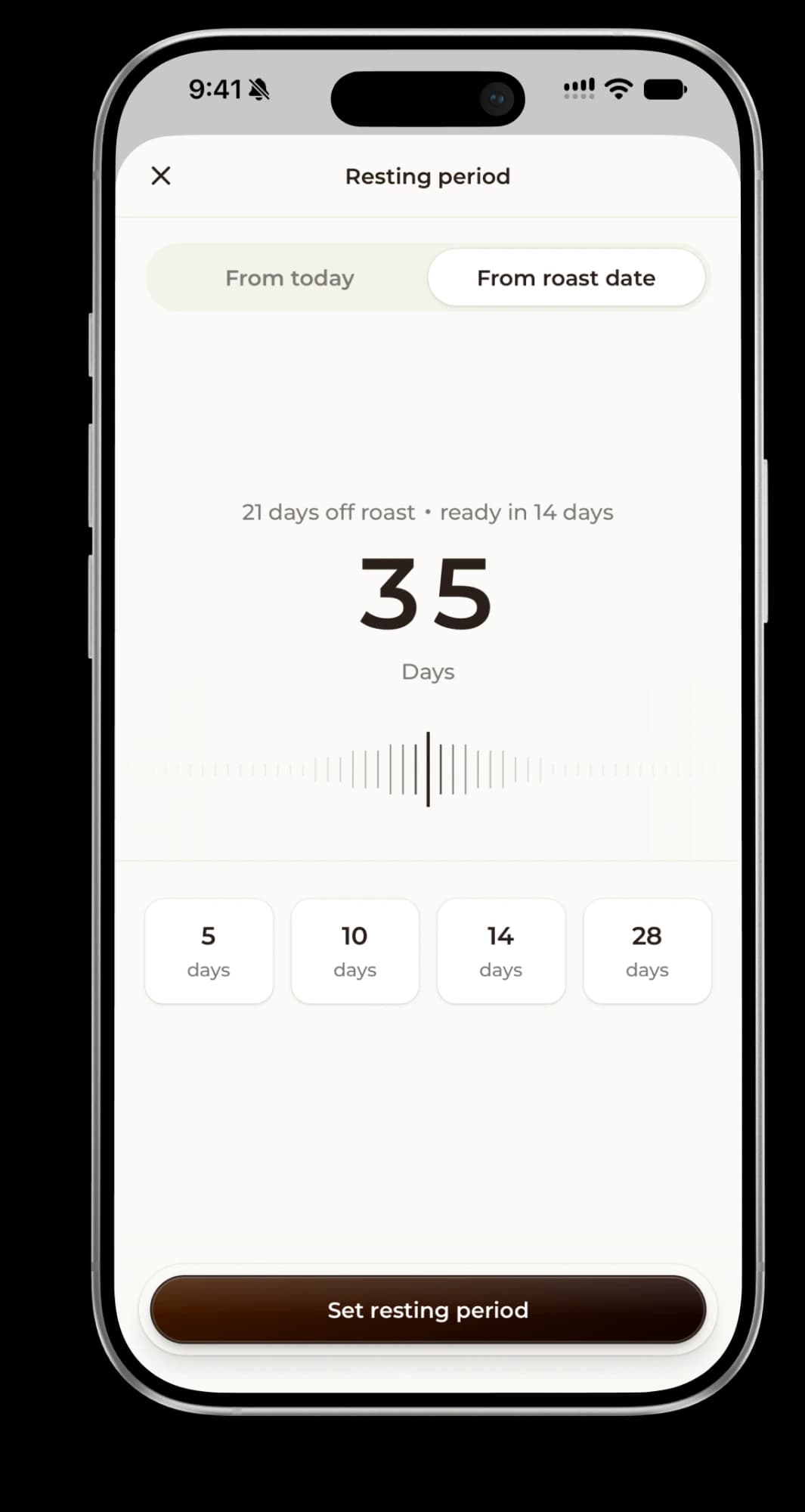
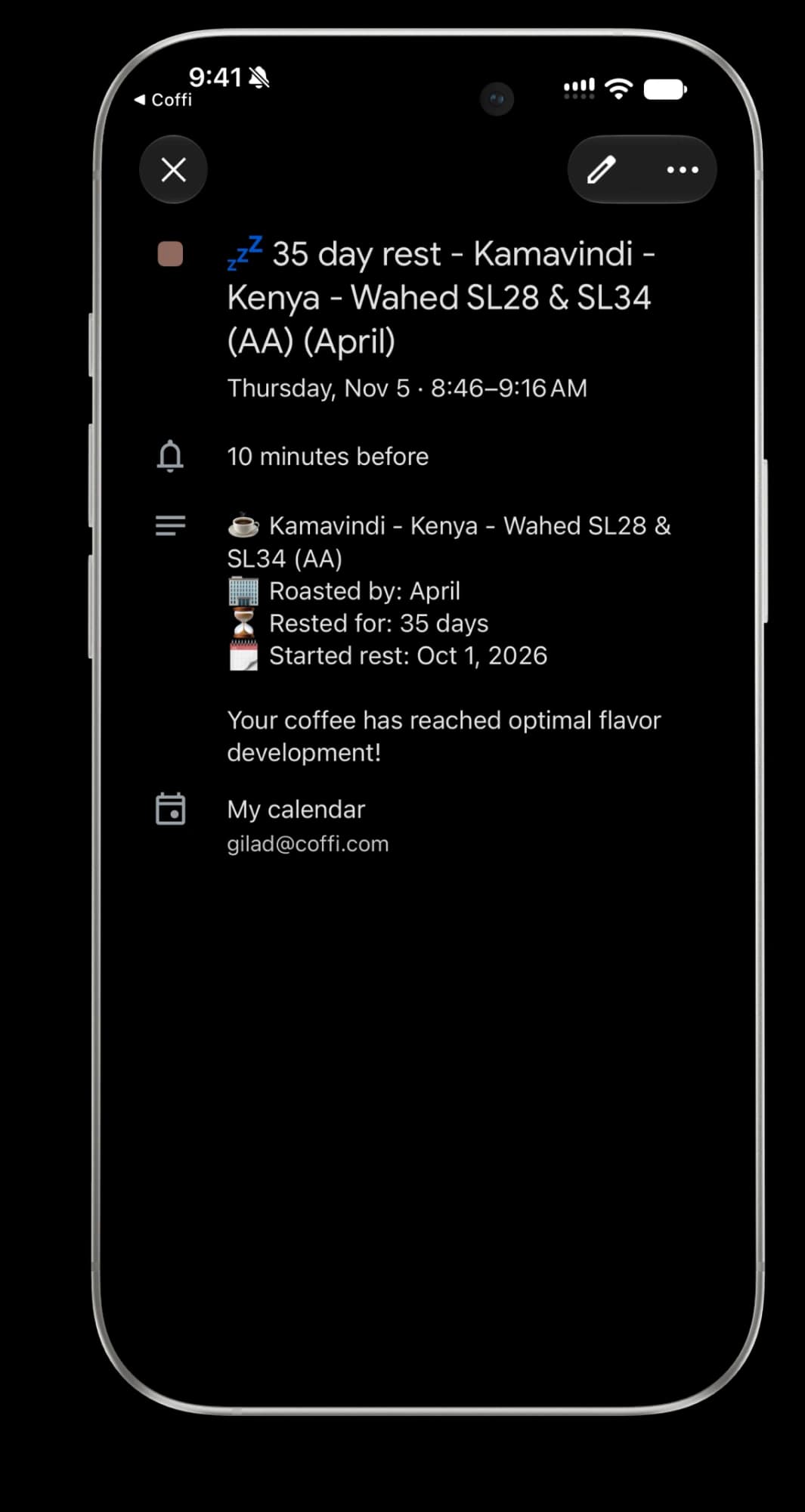
With Coffi Pro, set a resting period in days on any coffee, and Coffi reminds you when it’s time to brew. Add the ready date to your Apple or Google Calendar, or set more than one to taste the same coffee at different points and find its best day.
Advanced mode, also part of Pro, tracks each bag as its own record, with its roast date, size, price and where you bought it, and whether it’s in the freezer.
And when you buy on the Coffi Marketplace, each coffee ships from the roaster who roasted it.
Resting periods and Advanced mode are part of Coffi Pro.