
Black Friday30% offevery coffee and your first subscription box, until Monday.
Colombia Condor Decaf from Archers
Archers

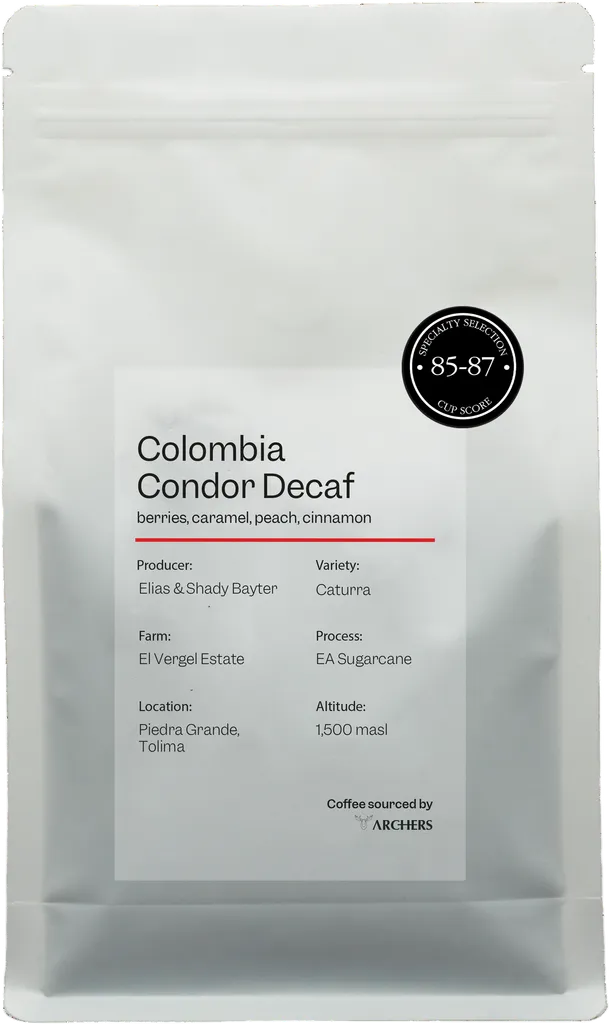
Colombia Condor Decaf

🇨🇴 Colombia

When the Bayter brothers observed that only low quality coffee was being used to make decaf, they decided to produce a specialty version using El Vergel Caturra. They found this variety could retain the coffee’s innate sweetness, after going through Sugar Cane Ethyl Acetate processing, commonly called “natural decaffeinated.” The ethyl acetate is the result of combining acetate with the ethanol from fermenting molasses that come from sugarcanes abundant in Colombia. This is an innovative and economic way for such readily available resource to complement the coffee industry.In this process, the coffee is first exposed to water and steam, increasing moisture content and expanding the beans. This facilitates caffeine extraction, which is done by washing them in the ethyl acetate, causing the caffeine to dissolve. Water and steam are again used, to clean the beans including the innermost parts. After, they are dried until moisture is similar to the level prior to processing.All throughout, there is no excessive heat or pressure applied and the beans’ cellular structure largely stays intact. Since the beans’ pores open up due to steaming though, this coffee — as greens and roasted — tends to age quicker than the regular. Roasted decaf would appear to “sweat” within several days of roast, sooner than non-decaf would. Not a big trade-off for enjoying the flavors of a high quality cup, without worrying about caffeine.

View full details

And thousands more coffees, all in one app.

Download Coffi

Already have it? Open in app

Description

When the Bayter brothers observed that only low quality coffee was being used to make decaf, they decided to produce a specialty version using El Vergel Caturra. They found this variety could retain the coffee’s innate sweetness, after going through Sugar Cane Ethyl Acetate processing, commonly called “natural decaffeinated.” The ethyl acetate is the result of combining acetate with the ethanol from fermenting molasses that come from sugarcanes abundant in Colombia. This is an innovative and economic way for such readily available resource to complement the coffee industry.In this process, the coffee is first exposed to water and steam, increasing moisture content and expanding the beans. This facilitates caffeine extraction, which is done by washing them in the ethyl acetate, causing the caffeine to dissolve. Water and steam are again used, to clean the beans including the innermost parts. After, they are dried until moisture is similar to the level prior to processing.All throughout, there is no excessive heat or pressure applied and the beans’ cellular structure largely stays intact. Since the beans’ pores open up due to steaming though, this coffee — as greens and roasted — tends to age quicker than the regular. Roasted decaf would appear to “sweat” within several days of roast, sooner than non-decaf would. Not a big trade-off for enjoying the flavors of a high quality cup, without worrying about caffeine.

More from Archers

Your coffee,
your way.