
Pan Wei wins the World Barista Championship 2026
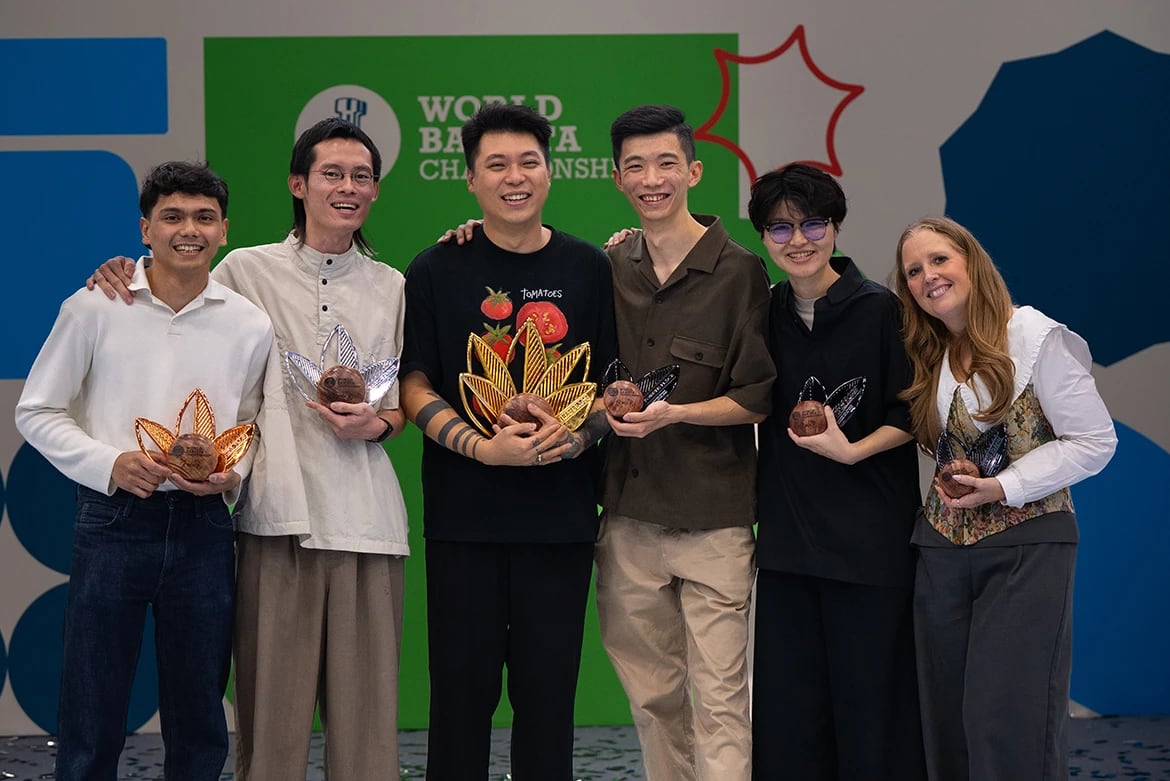
Pan Wei of China is the winner of the World Barista Championship 2026. He took the title on Sunday, October 25, in Panama City, ahead of Shing Win of Malaysia and Frederick Ruben of the United Arab Emirates, at the first championship held in Central America.
Here are the full results, the coffees the finalists chose, and what a week of competition coffee means for the bag on your shelf.
Who won the World Barista Championship 2026?
Fifty national champions started on Thursday, Sprudge counted, each with 15 minutes to serve four espressos, four milk drinks and four signature drinks of their own. Sixteen reached Saturday’s semifinals, and six made the final.
The World Coffee Championships announced the final ranking on October 25. Here it is, with the cafe or roastery each barista competed for, as Sprudge listed them.
- First: Pan Wei, China, of Parking Coffee.
- Second: Shing Win, Malaysia, of One Half Coffee Roastery.
- Third: Frederick Ruben, United Arab Emirates, of Benchmark Coffee.
- Fourth: Gabrel Tan, Australia, of Veneziano Coffee Roasters.
- Fifth: Jane Kawinnart, Thailand, of Fika & Co.
- Sixth: Jill Hoff, Canada, of Monogram Coffee.
Who is Pan Wei?
Pan Wei has worked in coffee for 12 years and competed for just as long, BeanScene reports. He is a two-time China Barista Champion and runs his own coffee brand and roastery in Hangzhou. This was his second World Barista Championship: at his first, in 2024, he placed 27th, Sprudge notes.
He takes over from Australia’s Jack Simpson, who won in Milan last year and handed him the trophy on stage.
Second place was a first, too. Shing Win, the 2025 Malaysia Barista Champion, gave Malaysia its best result yet, beating Jason Loo’s fourth place in 2025, Malay Mail reported. It was his first world championship.
How Panama did, and what comes next
World of Coffee Panama, the trade show around the championship, drew about 20,000 visitors over three days by a preliminary count, La Prensa reported. The organizers had expected about 13,000. Panama’s own champion, Benjamín Roque, reached the semifinals.
The next World Barista Championship, the 27th, is at World of Coffee Tokyo from April 28 to May 1, 2027, the organizers announced last year. Some countries have already chosen their baristas: China picked Sun Lei at its national final in July.
What did the finalists brew?
In our preview, we said to watch whether Gesha, the prized coffee variety Panama is known for (also spelled Geisha), would keep its hold on the stage. It did. Three finalists had their coffees reported by October 27, and all three used a Gesha from Panama.
Pan Wei’s espresso was a Gesha from Finca El Pergamino in Chiriquí, Panama, Sprudge reports. Before brewing, he stirred the grounds and vibrated them so the heaviest particles settled at the bottom, a step he calls “reverse tamping”.
For his milk drinks he switched to a Gesha from Huila, Colombia, fermented for 48 hours with mosto, a liquid made from coffee cherries, then dried slowly for 25 days, Agronegocios reports. His signature drink, “The Family Link”, brought the two together: chilled Panama Gesha espresso with a coffee cherry honey infusion and mosto, nitrogenated and topped up with sparkling water.
Shing Win, second, also used a Gesha from El Pergamino in Panama, a traditional washed one, according to Malay Mail. Washed means the fruit is removed from the bean before it dries. His routine was about moisture: how water in the bean shapes a coffee, from processing and drying at the farm to extraction in the cup.
Gabrel Tan, fourth, paired two origins. His espressos were a washed Gesha from Finca Lérida in Boquete, Panama, produced by Maria Amoruso, and his milk drinks used Kartika, a coffee variety, from Raymond Ali’s Finca Ali in South Sumatra, Indonesia. He called the routine “The Power of Recognition”: Panama’s established name next to Indonesia’s rising one, BeanScene reports.
For his signature drinks, he added koji-fermented tree tomato to the Panama coffee, for notes of blood orange and pink guava. Koji is the mold used to make soy sauce and sake. Every performance can be watched back on the World Coffee Championships’ YouTube channel.
What it means for the coffee you brew at home
You don’t need a competition budget to borrow from the final. Two ideas from it work just as well in a kitchen.
The first is Gabrel Tan’s pairing. Brew a coffee from an origin you know next to one you’ve never tried, the same way, on the same morning. Tasting them side by side is an easy way to notice what each one brings.
The second is Shing Win’s theme, moisture. You can’t control how a farm dries its coffee, but once the beans are roasted, keeping damp out is your part: keep them whole and sealed until you grind, as our guide to resting coffee beans explains.
Where to try a Gesha on Coffi
If the final made you curious, start with what the finalists chose: a Gesha. As of November 4, 2026, the Coffi Marketplace has Geshas from Ordinary Speciality Coffee Roasters in Frankfurt, Moxie in Phoenix, Arizona, Port 2050 in Saint Paul, Minnesota, and Mirra in Kingston, New York.

Ordinary’s is washed, from Lorenzo Arbildo Ubillus in Chirinos, Peru, with notes of green grape, fig jam, jasmine and orange. Moxie’s, from Marysabel Caballero and Moises Herrera in Honduras, is washed too: white stone fruit up front, lemongrass as it cools and intensely floral near room temperature, as Moxie describes it.
Want Panama itself? Port 2050 has a natural Geisha from Hacienda La Esmeralda, grown by the Peterson family, with notes of cherry blossom, orange candy and mango. Natural means the whole cherry dries around the bean. Mirra’s natural Geisha comes from the Gonzalez family’s Finca Clara Luz in Loja, Ecuador.
Taste Match gives every coffee a personal match score, built from a few questions about what you like, so you can see how well a Gesha suits you before you order. It’s free, and you don’t need an account.
Here are three to start with, from Peru, Honduras and Panama.